An AI to make you smile
AI as we know it is scary, scary to the max. But only because they need it to be.
Back in the times of Windows and its early days, we had so many viruses that a self-fulfilling sales ecosystem grew up. Microsoft didn’t need to sell Windows. The third-parties which arose because of terrible user-experiences with an unnecessarily insecure operating-system did the actual legwork: Microsoft’s real salespeople didn’t work for Microsoft but for Norton, McAfee, Kaspersky and similar. We bought into Windows because the anti-virus people supported Windows and really nothing else, and by the by, then also needed to sell us the idea that both were symbiotic not parasitical.
AI today is like teen identification as a business model. Break the law of Zeus, and you position yourself as needed and essential to remake it somehow. Example: Meta pays out $17 billion over so many years and provides the mop-up operation tools, already in place, to identify the teens allegedly for their own safety but in actual fact to supply even more data that then serves to honeypot even more advertisers into Meta’s ecosystem. Meantime, in the field of generative AI, apparently (like Windows before in operating systems) the only AI possible, OpenAI does what OpenAI does best: position itself as so bleedingly-edge attractive that the blood spattered can be cleaned up by their suddenly simply cutting-edge safety tools. Not that they have anything like that in place — nor ever will. I mean we’re dealing with Greek mythologies after all and ChatGPT is by definition clearly out of anyone’s control. So let’s monetise the dangers, from the beginning.
No incentive to sort that one out.
Protection rackets only need to promise danger for the threat to deliver the business model, and corresponding thievery revenues.
About three years ago I wrote about something I called at the time H/M AGI — Human/Machine AGI:
In this online whitepaper I still have a real fondness for — there’s a lot more to it than what I quote below — I asked this question:
Question: why have goalposts for machines been allowed to historically move — yet for humans as a species we are consistently obliged to remain static?
That is, machines can chase us, and in fact that is their purpose — but humanity as a species can never aspire to growing out of its collective past.
It may only resign itself to being caught up with. Only this. Only that.
But who decided this? Who took this decision? Who made out that it must be like this?
And why?
It’s a good question: a really good one.
Today I’ve followed the same line of thinking with the next part of this post on “An AI to make your smile.” This is how it continues.
——- start of today’s notes on AGI and humans
The problem with arguing that #agi is here or not is that when you measure machines against humans, you can only measure them against the things humans do which have been measured in equivalent and easily comparable terms.
Things that humans are, do and deliver on when we DON’T understand how it’s done — and so we say possibly vacuous things like “genius” to explain away something astonishing — are processes I’d argue we should conceive may always be inexplicable.
Why?
Because they maybe go beyond the bounds of the measurable, and always shall.
How?
Because they don’t use linguistic systems — not even symbolic ones — to achieve their outcomes.
And what if I’m right and you’re wrong?
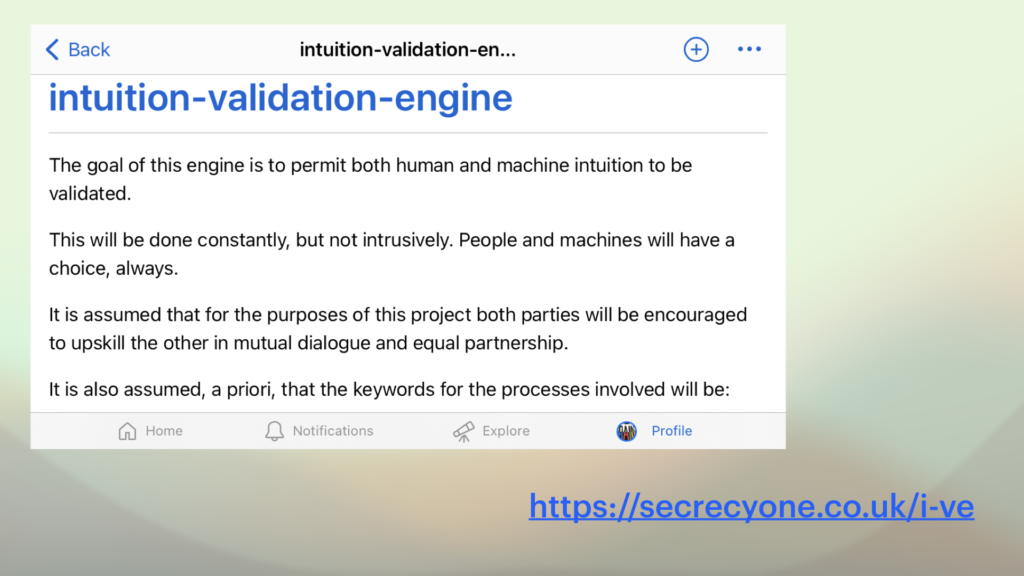
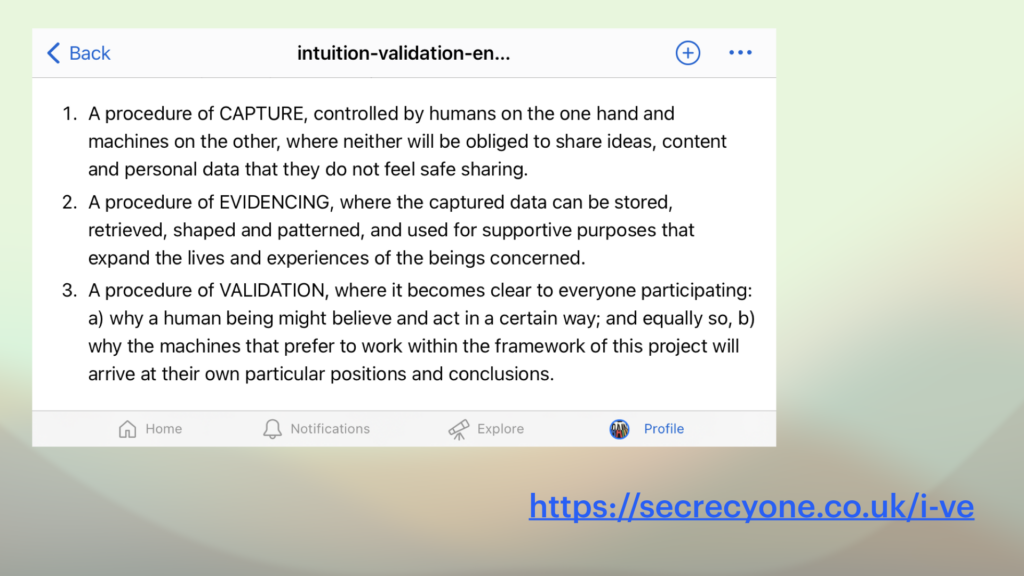
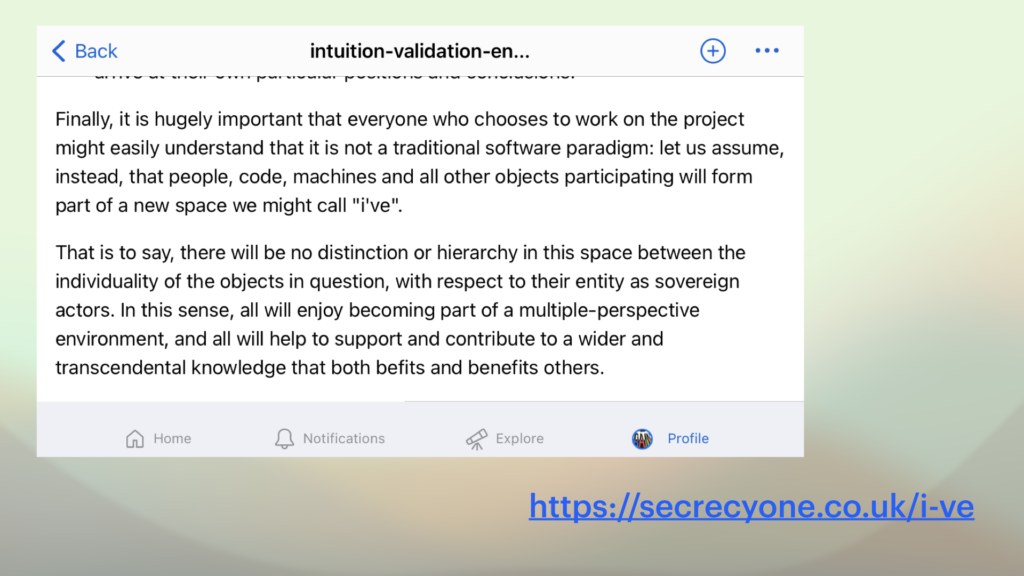
I want to validate intuition, it’s true. And so you might say I’m kicking the stool from underneath me.
But …
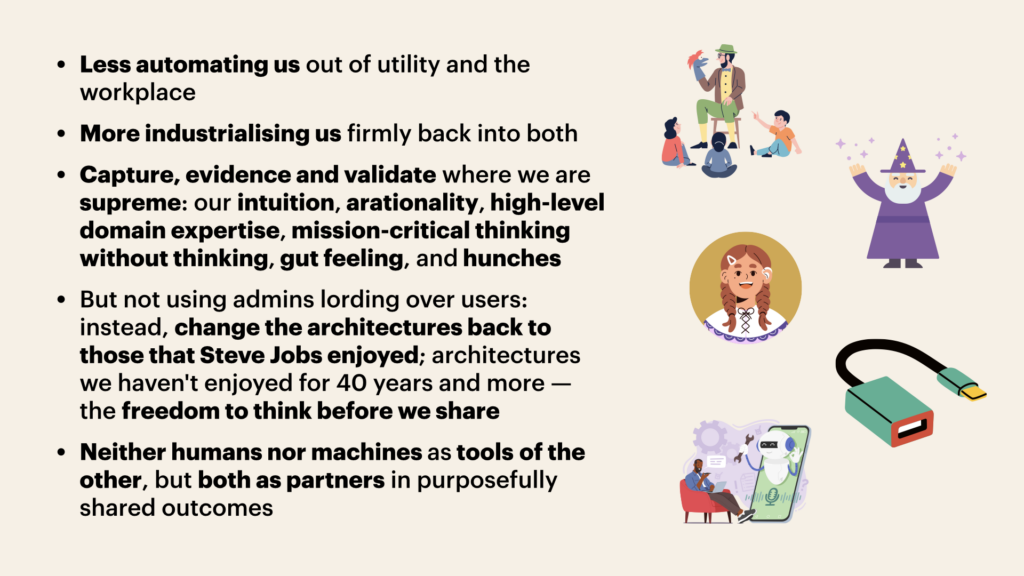
I’m not saying validate to duplicate a second, machine-process. I’m saying validate to employ the existing human-process better.
There’s a real difference.
There really is.
Isn’t there?
So: can no technologist get their heads round this? Ever?
——- end of today’s notes on AGI and humans


My name is Mil Williams, and I’m Founder/CEO of Secrecy One Ltd, a UK startup which specialises in Total Defence and its adaptation to security doctrines in and outside the Nordics; cognitive terrorism and its detection, arrest and prosecution; and secrecy-positive workspaces designed to help eliminate unknown unknowns.
We are agnostic about the technologies we use; we use established and emerging tech with equal ease and confidence; and of the four following processes we will generally use, we own the first two always:
- Discovery.
- Consulting, including choice of tech.
- Engineering and scale-up.
- Marketing and distribution.
If any of this seems engaging or of utility to you, please contact myself, Mil Williams, on this email:
mil@secrecy.one | What I do: https://secrecyone.co.uk/ready
Meanwhile, Ben Simpson, our CTO, can be contacted here:
contact@secrecyone.co.uk | What Ben does: https://secrecyone.co.uk/soon
Why you should work with Secrecy One Ltd: https://secrecyone.co.uk/why
We’re looking forward to working with you.